Comparative Literature Today: Notes from the Field
DOI:
https://doi.org/10.51427/com.jcs.2024.6.1Keywords:
Comparative Literature, contemporary Humanities, interdisciplinarity, intermediality, hermeneuticsAbstract
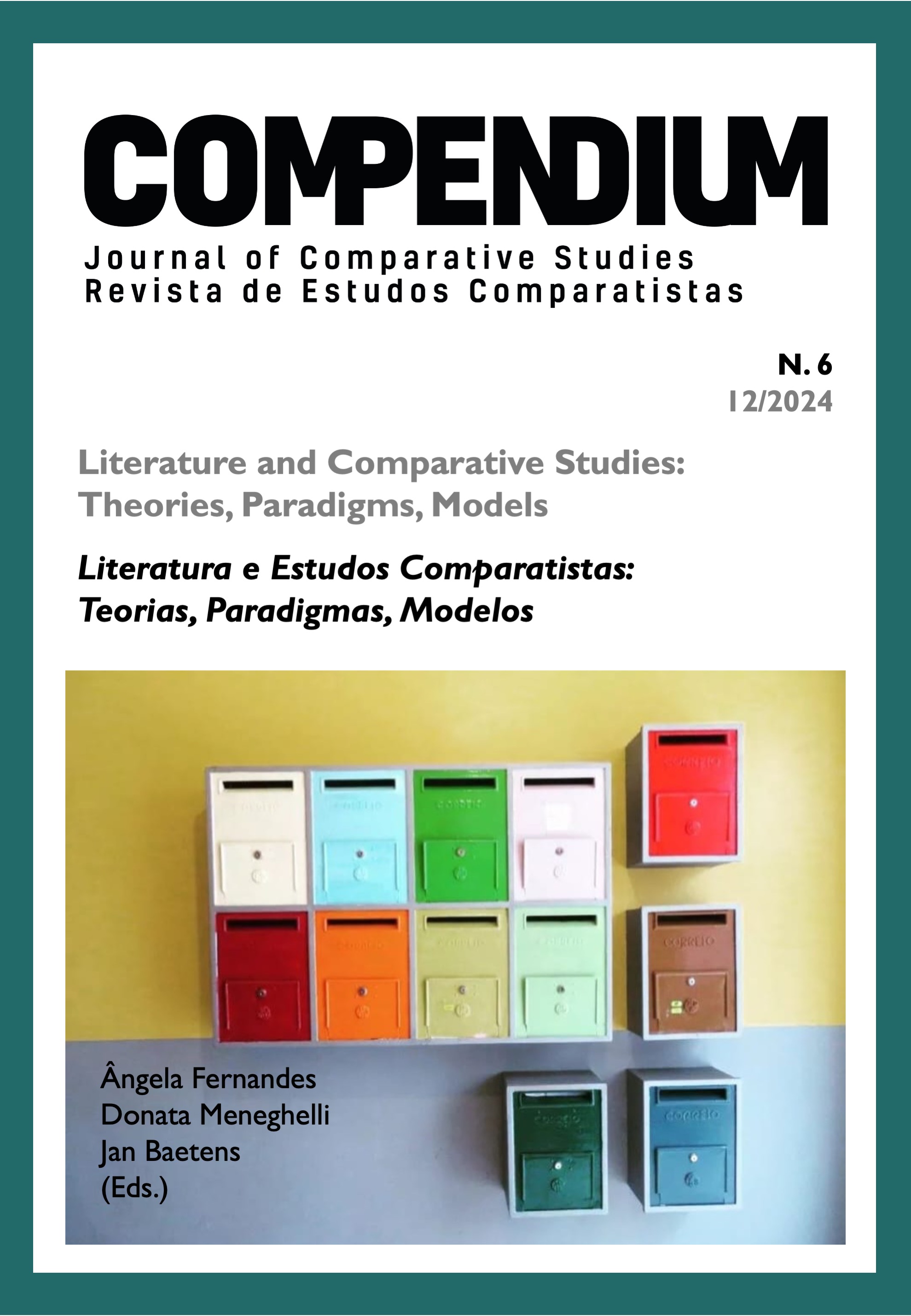
The sixth issue of Compendium is dedicated to the reflection on the current position, the shifting practices and the conflicting views about the field of Comparative Studies within the Humanities in the early twenty-first century. Considering Literature as the creative field that first witnessed the consolidation of comparative approaches, this issue offers articles and book reviews exploring relevant and timely topics, from historical and geographical debates to feminist perspectives or cyborg culture. Additionally, it includes a questionnaire where scholars from different backgrounds present their personal engagement with the field, their position regarding some key issues and their view on the near future.
Downloads
References
Bertoni, Federico. 2018. “La teoria alla prova”. Comparatismi no. 3: 38-49. https://doi.org/10.14672/20181480
De Gasperi, Giulia & Pivato, Joseph, eds. 2018. Comparative Literature for the New Cen-tury. Montreal: McGill-Queen’s University Press.
Domínguez, César, Haun Saussy, Darío Villanueva. 2015. Introducing Comparative Litera-ture. New Trends and Applications. London and New York: Routledge.
Griffiths, Devin. 2017. “The Comparative Method and the History of the Modern Huma-nities”. History of Humanities 2 (2): 473-505. http://dx.doi.org/10.1086/693325
Hutchinson, Ben. 2018. Comparative Literature: A Very Short Introduction. New York: Ox-ford University Press.
Marx, William. 2020. Leçon inaugurale de la chair « Litteratures comparées ». Paris, Collège de France. Vivre dans la bibliothèque du monde | Collège de France (college-de-france.fr)
Downloads
Published
How to Cite
Issue
Section
License
Copyright (c) 2024 Ângela Fernandes, Donata Meneghelli, Jan Baetens

This work is licensed under a Creative Commons Attribution 4.0 International License.
Compendium publishes all issues in Open Access. Authors retain copyright and grant the journal right of first publication with the work licensed under a Creative Commons Attribution 4.0 International (CC BY 4.0), allowing others to share their work with acknowledgement of the authorship and initial publication in this journal.